











how to evaluate quality of an led profile spot light manufacturer? | Insights by LEEMC Stage Lighting
- 1. How can I verify a manufacturer's LM-79 / LM-80 / TM-21 photometric test reports for an LED profile spot light?
- 2. What thermal-management tests should I demand to ensure LED lumen maintenance (L70/L90) for touring profile spotlights?
- 3. Which measurements confirm a profile spot's color accuracy and camera-friendliness (TLCI, TM-30, flicker metrics) for broadcast and filmed stages?
- 4. How do I assess the mechanical durability of framing shutters, iris and gearing for rental and touring use?
- 5. How to evaluate a manufacturer's driver and control electronics to prevent DMX dropouts, flicker and support RDM or firmware updates?
- 6. What supply-chain, quality-system proofs and after-sales commitments (LED chip brands, ISO, traceability, warranty, spare parts lead time) should I request before placing a bulk order?
Buying professional LED stage profile spot lights requires more than price comparison. This guide explains specific, technical checks to evaluate an LED profile spot light manufacturer: from photometric test reports (LM-79/LM-80/TM-21) to thermal design, camera performance (TLCI/flicker), framing shutter durability, electronics and control reliability, and supplier traceability and after-sales readiness. The recommendations below embed practical thresholds and tests used by rental companies, broadcasters and touring production managers.
1. How can I verify a manufacturer's LM-79 / LM-80 / TM-21 photometric test reports for an LED profile spot light?
Why this matters: Photometric and electrical reports (LM-79) and LED package data (LM-80) are the backbone for predicting real-world lumen output and life. Many entry-level buyers accept manufacturer claims at face value; however, misreading these reports can lead to underperforming fixtures onstage, mismatched color, and costly returns.
What to request and how to verify:
- Request the LM-79 report for the finished luminaire: LM-79 (IESNA LM-79-08) provides measured lumens, flux distribution, input power, spectral power distribution (SPD) and color coordinates for the complete fixture. Ensure the report is from an accredited laboratory (NVLAP, UKAS or equivalent) and dated within the last 3 years.
- Obtain LM-80 data for the LED packages used: LM-80 (IES LM-80-15) shows lumen maintenance of the LED package at defined drive currents and temperatures for 6,000, 10,000 or more hours. Confirm the LED vendor (for example, Osram, Lumileds, Samsung, Cree/Wolfspeed) listed on the report.
- Check TM-21 projections: IES TM-21 describes extrapolating LM-80 data to predict L70/L90 life. Verify the test duration used for LM-80 and remember TM-21 rules limit extrapolation to 6× the tested period. For example, if LM-80 was 6,000 hours, the TM-21 projection can safely extend to 36,000 hours.
- Match test conditions to your spec: Ensure LM-79 was performed at the fixture’s rated drive current and intended CCT (e.g., 3000K, 5600K). If the fixture has multiple CCT modes, ask for separate LM-79 tests per mode or a clear statement of expected output difference.
- Verify SPD and color coordinates: Compare the Spectral Power Distribution and xy coordinates in the LM-79 report with manufacturer-claimed CCT and CRI. Look for spectral spikes (narrow-band LED peaks) that may affect camera rendering despite a good CRI; for broadcast, prefer TLCI and TM-30 evaluation in addition to CRI.
Practical thresholds and red flags:
- Red flag: Only photometric claims without an LM-79 from an accredited lab.
- Good practice: LM-79 for final luminaire, LM-80 for LED packages, and TM-21 life projections that align with your expected duty cycle (touring vs installation).
- Expectation: For professional profile spots, L70 > 30,000–50,000 hours based on TM-21 projections is common; confirm the test basis before accepting a lifetime figure.
2. What thermal-management tests should I demand to ensure LED lumen maintenance (L70/L90) for touring profile spotlights?
Why this matters: Poor thermal design accelerates lumen depreciation, color shift and driver failures. Touring and rental use add vibration and variable ambient conditions; the fixture’s heatsinking and thermal path must be validated.
Key thermal checks and metrics:
- Ask for LM-80 test conditions including TC (case) temperatures used. Effective thermal management in the fixture ensures the LED junction temperature stays within the LM-80 test conditions.
- Request thermal imaging (IR) maps from factory acceptance tests showing steady-state temperatures at rated output and typical ambient (e.g., 25°C and 40°C). Look for hotspots at solder joints or driver components.
- Demand an actual burn-in/soak test on assembled fixtures: at least 72–168 hours at rated current and elevated ambient (e.g., 40°C) is typical for professional manufactures. Touring-grade fixtures often see 168–500-hour burn-in where possible.
- Confirm IP and ingress protection if the fixture is to be used in dusty or humid environments. Even indoor fixtures benefit from conformal coating or sealed electronics if used outdoors or for long tours.
- Review material and design choices: high-conductivity die-cast heat sinks, direct-bonding to LED MCPCB, thermal interface materials and tightly controlled soldering processes reduce thermal resistance and improve lumen maintenance.
Practical thresholds and expectations:
- Target: fixtures whose thermal design keeps LED junction temperatures at or below the LM-80 test condition (e.g., TJ ≤ 85°C if LM-80 tested at 85°C).
- Desirable: manufacturer publishes TC-point locations on the luminaire and shows how they monitor those during LM-79 testing.
- Red flag: no burn-in, missing thermal maps, or vendor claims of long life without LM-80/TM-21 backing.
3. Which measurements confirm a profile spot's color accuracy and camera-friendliness (TLCI, TM-30, flicker metrics) for broadcast and filmed stages?
Why this matters: A fixture that looks acceptable to the eye may still produce camera artifacts, poor skin tones, or banding under rolling shutter. Modern productions require fixtures that are both visually pleasing and camera-friendly.
Essential color and temporal metrics to request:
- TLCI (Television Lighting Consistency Index): EBU Tech 3353 (TLCI) predicts how well a light source renders colors on cameras. For broadcast, aim for TLCI ≥ 90. Many professional profile spotlights claim TLCI 90–100.
- TM-30 metrics (IES TM-30-15): TM-30 reports Rf (fidelity) and Rg (gamut). TM-30 gives finer granularity than CRI alone. Rf ≥ 90 and Rg close to 100 are strong indicators of color fidelity.
- Flicker and stroboscopic testing: ask for percent flicker, flicker index and PWM frequency. For camera work, fixtures with PWM frequencies above several kHz (typically >4–8 kHz) and percent flicker <1% are preferred. For touring and broadcast rigs, many manufacturers advertise PWM >20 kHz to minimize rolling-shutter artefacts.
- Request the SPD (spectral power distribution) curve from LM-79: narrow spectral spikes can cause camera metering artifacts or color grading complications even when CRI is high.
- Ask for measured camera tests: some manufacturers provide footage of fixtures under common camera settings (e.g., 24/25/30/50/60/120 fps). If they can show no banding at those framerates at key dimming levels, that’s a strong signal.
Practical thresholds and red flags:
- Target: TLCI ≥ 90 for broadcast; TM-30 Rf ≥ 90 where possible. Percent flicker <1% and PWM frequencies high enough to avoid camera banding on typical sensor shutter speeds.
- Red flag: only CRI provided without TLCI or TM-30, or lack of any measured flicker data and camera test footage.
4. How do I assess the mechanical durability of framing shutters, iris and gearing for rental and touring use?
Why this matters: For profile spot lights used in theatres, rental fleets and touring, mechanical parts (framing shutters, iris, gobos, focus mechanisms) are wear components. Poor design or weak materials lead to play, misalignment and failure under continuous use.
What to inspect and which tests to require:
- Ask for cycle-life data on moving parts: reputable rental-grade manufacturers will provide expected cycle counts or mean-time-between-failure (MTBF) for motors, shutters and gear trains. Common benchmarks: tens to hundreds of thousands of cycles for motors and shutter operations depending on the mechanism.
- Request materials and manufacturing details: look for hardened stainless or treated aluminum blades for framing shutters, worm gears with proper lubrication and sealed bearings for pivot points. Avoid purely plastic blades in critical shutter mechanisms for touring use.
- Vibration and shock testing: for touring, fixtures should undergo IEC 60068 series testing or documented vibration/shock tests that mimic transport rigging. Ask for factory test certificates or FAT reports showing vibration testing parameters.
- Check serviceability: are shutter modules repairable and swappable in the field? Modular designs with replaceable blades, motors and connectors reduce downtime and logistics costs.
- Evaluate precision: for framing shutters used in tight edge projection, request test measurements for shutter edge straightness and repeatability (e.g., ±0.5° repeatability in shutter positioning). Manufacturers often provide mechanical tolerances in specs—compare these to your operational needs.
Practical thresholds and red flags:
- Expectation: rental/touring-grade fixtures provide documented lifecycle testing and vibration/shock test reports. Shutter repeatability and minimal play are essential for demanding lighting designs.
- Red flag: no cycle-life data, plastic shutter blades without clear replacement policy, or inability to provide service parts and exploded diagrams.
5. How to evaluate a manufacturer's driver and control electronics to prevent DMX dropouts, flicker and support RDM or firmware updates?
Why this matters: Control electronics determine how smoothly a fixture dims, whether colors shift under networked control, and whether you can update firmware or diagnose faults remotely. Many early buyers accept advertised DMX compatibility without probing real-world reliability.
Key specifications and verification steps:
- Confirm DMX/RDM support and version: professional fixtures should support USITT DMX512-A and RDM (Remote Device Management) for addressing and diagnostics. For network control, confirm support for sACN and Art-Net and provide details on how many universes are supported when in pixel-mode or with media servers.
- Ask about wireless DMX options and interoperability: if wireless DMX is required, check support for established systems (e.g., LumenRadio CRMX or Wireless Solution’s W-DMX) and confirm tested range and real-world throughput in congested RF environments.
- Driver design and flicker control: request driver specs showing PWM frequency, dimming curve (linear, logarithmic, gamma-corrected), and whether the driver implements high-frequency switching to avoid visual flicker and camera banding. Also ask for flicker test reports (percent flicker, flicker index) across dimming ranges (0–100%).
- Firmware management and diagnostics: confirm whether firmware updates can be performed locally (USB) or remotely (RDM/Ethernet) and whether the manufacturer maintains a clear firmware version history and changelog. Remote diagnostics, current/voltage telemetry and temperature telemetry are increasingly valuable in fleet management.
- Electromagnetic compatibility (EMC) and surge protection: check CE EMC, FCC (where applicable), and surge protection specs for the driver. For touring gear, robust surge protection and transient suppression reduce downtime from venue power issues.
Practical thresholds and red flags:
- Expectation: DMX512-A and RDM support, high PWM frequencies, documented dim curves and an accessible firmware update mechanism.
- Red flag: vague or no information about dimming method, no RDM, or firmware update procedures that require factory service for simple fixes.
6. What supply-chain, quality-system proofs and after-sales commitments (LED chip brands, ISO, traceability, warranty, spare parts lead time) should I request before placing a bulk order?
Why this matters: Procurement risk comes from parts obsolescence, weak quality control and lack of spare part support. For fleets and long-term installations, supplier transparency on components and quality systems is crucial.
Documentation and confirmations to demand:
- Component traceability: ask for a Bill of Materials (BOM) summary that names key suppliers for LED packages, drivers, motors and optics. Industry-preferred LED suppliers include Cree/Wolfspeed, Osram, Samsung, and Lumileds—while contract manufacturers may substitute parts, transparency is important.
- Quality systems and factory audits: request evidence of ISO 9001 certification or similar quality management systems. For large orders, arrange a factory audit or third-party inspection and ask for supplier QA reports and process control documentation.
- Certifications: verify CE / UKCA for Europe/UK, UL/ETL for North America (if required), RoHS and REACH compliance, and relevant IEC standards (e.g., IEC 60598 for luminaires). For photobiological safety, check IEC 62471 declarations if fixture SPD indicates potential risks.
- Warranty and RMA policy: get a clear warranty statement (term in years, scope) and understand the return material authorization (RMA) process, depot repair options, and average turn-around time. For rental fleets, 3–5 year warranty with parts support is common; for large purchases, negotiate on-site support or spare-parts consignment.
- Spare parts availability and obsolescence policy: ask for guaranteed spare parts availability (e.g., 5–10 years) and lead times for common items (LED modules, drivers, shutter mechanisms). Also request repair manuals, exploded views and service part numbers.
- Factory Acceptance Test (FAT) and pre-shipment inspection: define acceptance criteria (photometric tolerance, mechanical fit, firmware version) and require pre-shipment checks on a sample batch. This reduces surprises on arrival.
Practical thresholds and red flags:
- Expectation: transparent BOM, ISO 9001 or equivalent, clear certifications, and a documented warranty and spare-parts policy.
- Red flag: refusal to name LED or driver vendors, no QA certificates, or indefinite spare-part availability.
Closing summary: advantages of choosing a reputable LED profile spot light manufacturer
Choosing a manufacturer that provides accredited LM-79/LM-80/TM-21 documentation, robust thermal and burn-in testing, broadcast-grade color and flicker metrics (TLCI/TM-30 and low percent flicker), proven mechanical cycle lives for framing shutters, reliable driver/control electronics with RDM and firmware support, plus transparent supply-chain and warranty commitments, delivers measurable advantages: predictable lumen maintenance (reducing replacement cost), camera-friendly color rendering, lower downtime for touring and rental fleets, and less procurement risk from parts obsolescence. These benefits translate to lower total cost of ownership, fewer show-stopping failures and better-looking productions.
For an evaluation checklist tailored to your use case (rental, tour, theatre, broadcast) or a formal Factory Acceptance Test (FAT) template, contact us for a quote and consultation. Visit www.lmstagelight.com or email info@lmstagelight.com.
The Future of Stage Lighting: Innovations and Trends to Watch in 2025
How Video conference Lighting is Transforming Corporate Communication
The Evolution of Video conference Lighting: How Proper Lighting is Revolutionizing Remote Work
FAQs
What services does LEEMC Stage Lighting provide?
In addition to high-quality lighting products, we also provide lighting layout design, system schematic renderings, free technical guidance, installation and commissioning, and staff training.
Where are LEEMC Stage Lighting 's products suitable for?
Our lighting solutions are widely used in various venues, including stages, conference rooms, performance venues, theaters, and more, and are particularly suitable for stage and video conferencing environments.
What products does LEEMC Stage Lighting offer?
We offer a wide range of lighting products, including LED flat soft lights, tri-color conference lights, LED spotlights, LED PAR lights, ceiling lights, and stage moving headlights.
How is LEEMC Stage Lighting's product quality guaranteed?
Our products undergo rigorous testing and precision engineering to ensure that each product meets international standards for functionality, durability, and safety.
How can I become an LEEMC Stage Lighting distributor?
We welcome distributors worldwide and offer exclusive distribution, technical support, and marketing resources to help you succeed in the market. Please contact us for more information about partnering.
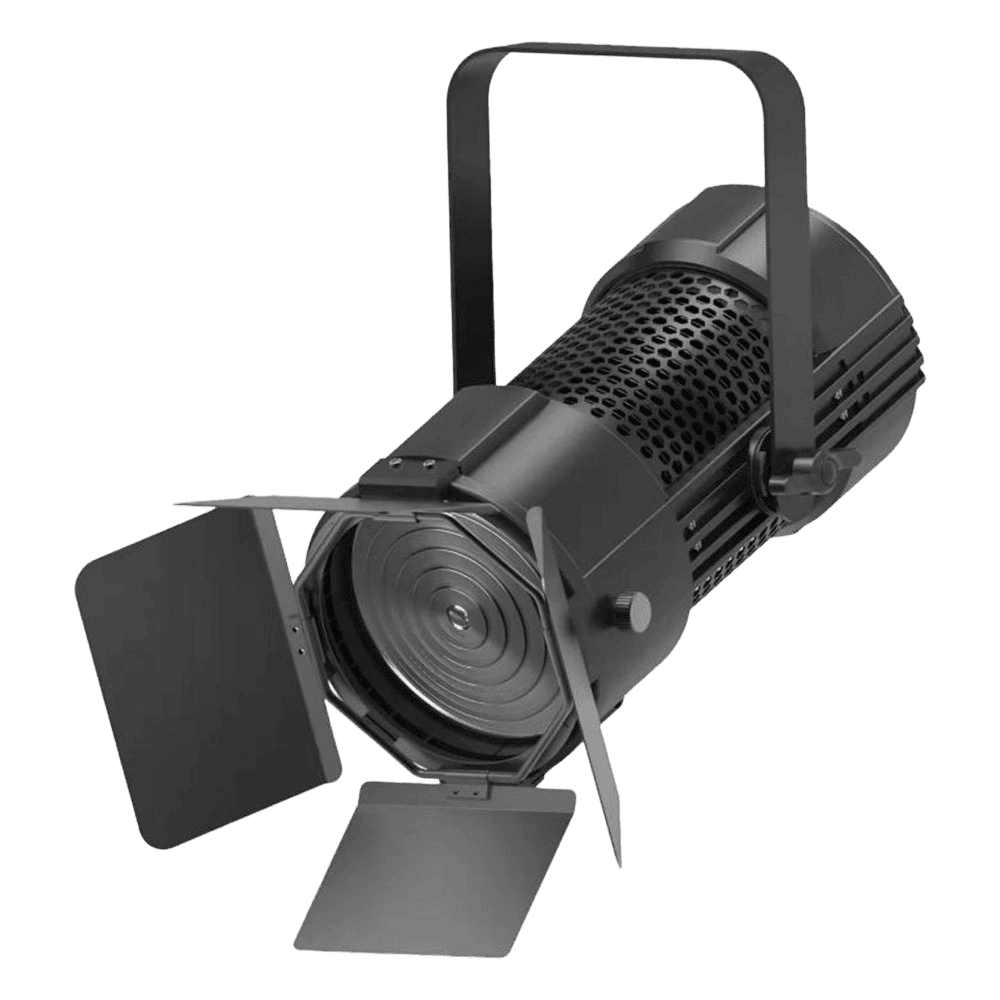
300 W RGBW LED Fresnel light
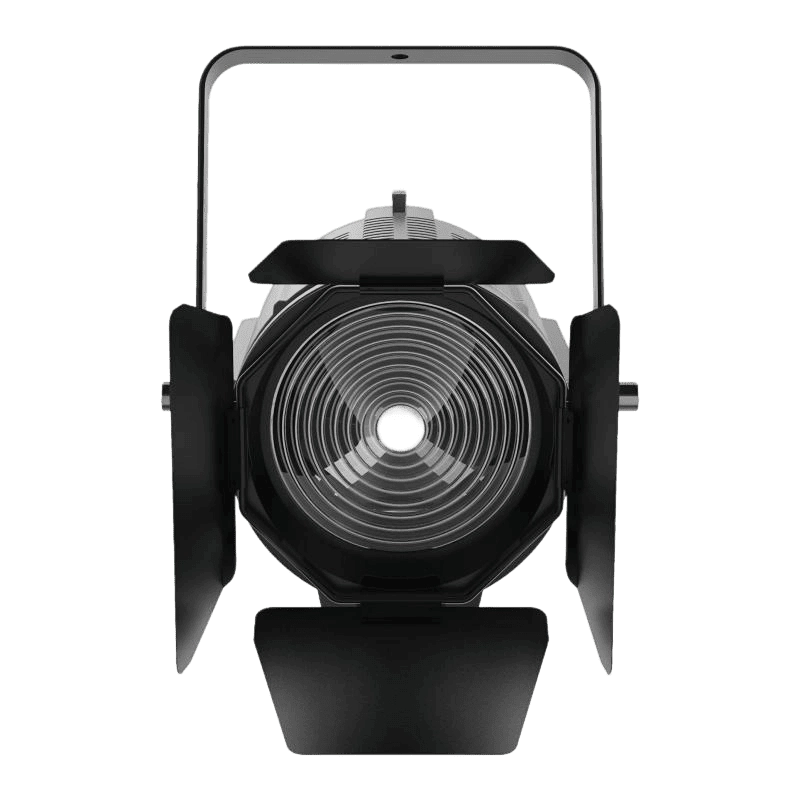
The LED Studio Fresnel Spotlight is a professional lighting device specifically designed for film and television studio stages, web series sets, and high-definition live streaming rooms. It features a high-power COB LED combined with a premium Fresnel lens optical system, delivering ultra-high color rendering (Ra ≥ 95, R9 ≥ 90, TLCI ≥ 96) and uniform and soft light output with smooth edge transitions. Free from harmful UV/IR radiation, it protects actors’ skin and props.
The spotlight offers 0–100% 16-bit linear flicker-free dimming and supports DMX512/RDM remote control. Coupled with four-leaf barndoors, it enables precise shaping of character outlines and scene layering.
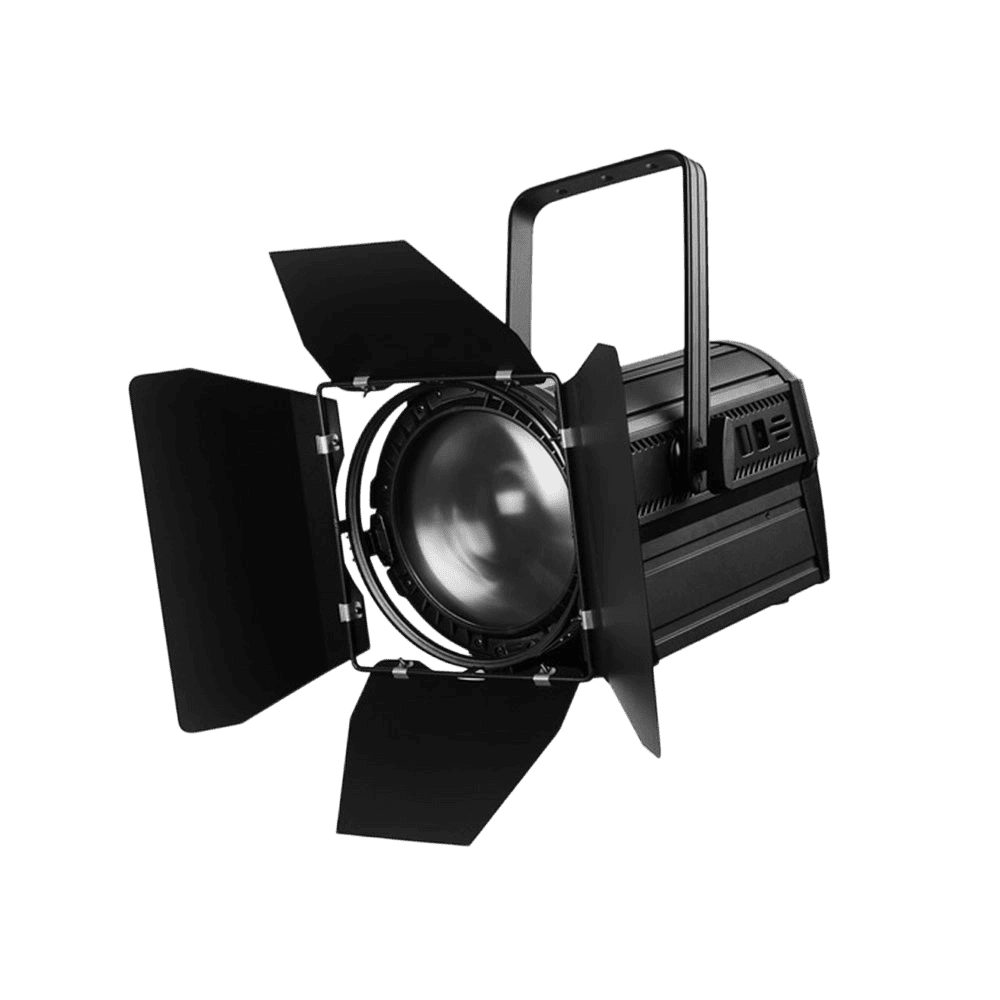
100W LED Fresnel Light
The LED Studio Fresnel Spotlight is a professional lighting device specifically designed for film and television studio stages, web series sets, and high-definition live streaming rooms. It features a high-power COB LED combined with a premium Fresnel lens optical system, delivering ultra-high color rendering (Ra ≥ 95, R9 ≥ 90, TLCI ≥ 96), uniform and soft light output with smooth edge transitions. Free from UV/IR harmful radiation, it protects actors’ skin and props. The spotlight offers 0–100% 16-bit linear flicker-free dimming and supports DMX512/RDM remote control. Coupled with four-leaf barn doors, it enables precise shaping of character outlines and scene layering.
Flexible color temperature options include 3200K (warm white tungsten), 5600K (cool white daylight), or continuously adjustable from 2700K to 6500K. With minimal color deviation (SDCM), it ensures true-to-life skin tone reproduction.
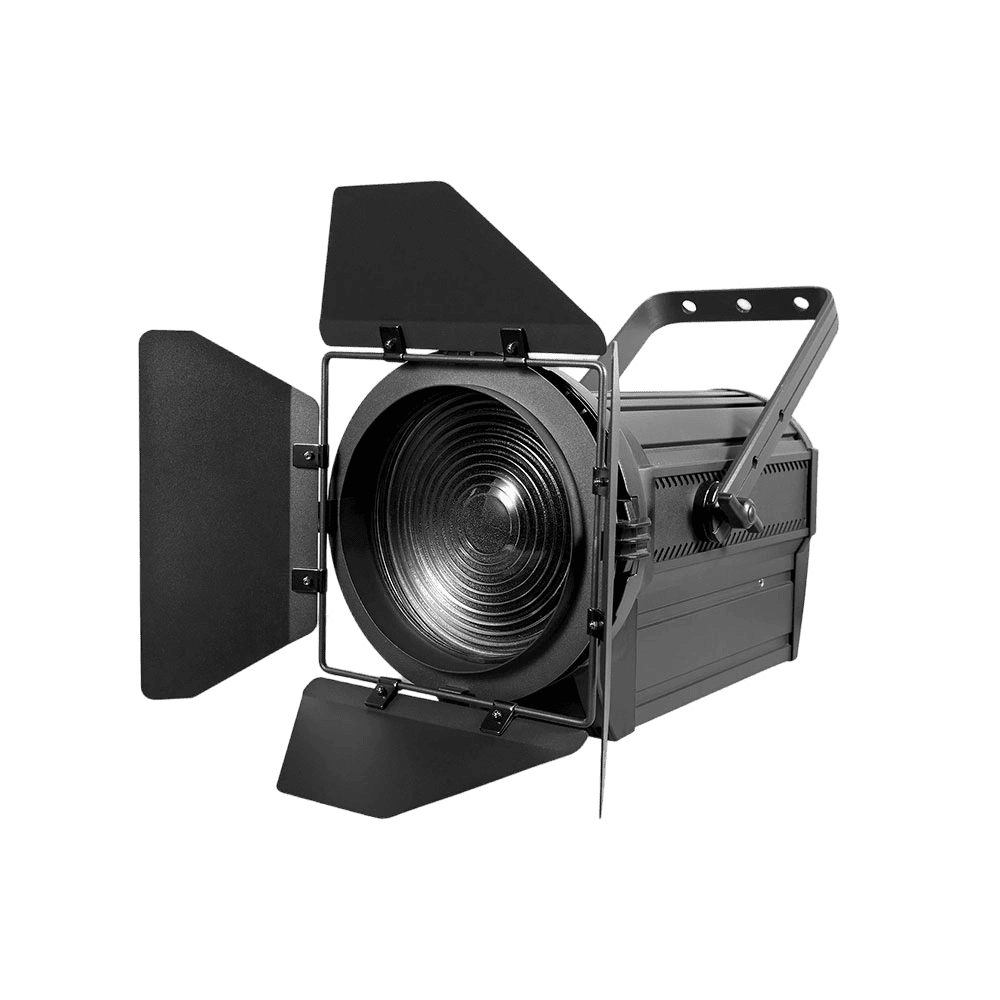
200 W RGBW LED Fresnel Light
The LED Studio Fresnel Spotlight is a professional lighting device specifically designed for film and television studio stages, web series sets, and high-definition live streaming rooms. It features a high-power COB LED combined with a premium Fresnel lens optical system, delivering ultra-high color rendering (Ra ≥ 95, R9 ≥ 90, TLCI ≥ 96) and uniform and soft light output with smooth edge transitions. Free from harmful UV/IR radiation, it protects actors’ skin and props.
The spotlight offers 0–100% 16-bit linear flicker-free dimming and supports DMX512/RDM remote control. Coupled with four-leaf barndoors, it enables precise shaping of character outlines and scene layering.
200W LED Fresnel Light
The LED Studio Fresnel Spotlight is a professional lighting device specifically designed for film and television studio stages, web series sets, and high-definition live streaming rooms. It features a high-power COB LED combined with a premium Fresnel lens optical system, delivering ultra-high color rendering (Ra ≥ 95, R9 ≥ 90, TLCI ≥ 96), uniform and soft light output with smooth edge transitions. Free from UV/IR harmful radiation, it protects actors’ skin and props.
The spotlight offers 0–100% 16-bit linear flicker-free dimming and supports DMX512/RDM remote control. Coupled with four-leaf barn doors, it enables precise shaping of character outlines and scene layering.
Discuss Your Lighting Project with Our Experts
If you have any comments or good suggestions, please leave us a message; later our professional staff will contact you as soon as possible.
Creating a superior lighting experience with pure light colors.
Guangzhou LEEMC Stage Lighting Technology Co., Ltd.
Email: info@lmstagelight.com
WhatsApp: +86 188 2626 7413
Address: Room 601, Unit 01, Building A8, Zone A, Konggang Meiwan Science and Technology Park, Huadu District, Guangzhou City, Guangdong Province, China.
Social media:
LM light
lmstage
LM STAGE