










what is the lead time for custom led profile spot light manufacturers? | Insights by LEEMC Stage Lighting
- Beyond the quoted lead time, what are the most common unexpected delays that can significantly push back the delivery of custom LED profile spot lights, and how can I proactively mitigate them?
- For urgent projects, what specific options exist for expediting the manufacturing and delivery of custom LED profile spot lights, and what are the typical cost implications and feasibility trade-offs?
- How do highly specialized customization requests, such as unique optical systems or integrated control protocols (e.g., RDM, sACN), impact the overall lead time for a custom LED profile spot light compared to standard modifications?
- Once manufacturing is complete, what are the typical international shipping lead times for custom LED profile spot lights, and what factors (e.g., customs, freight type) should I account for when planning my project timeline?
- If design revisions or specification changes become necessary *during* the production phase of custom LED profile spot lights, how does this typically affect the original lead time, and what's the best practice for managing such changes efficiently?
- Does placing a larger volume order for custom LED profile spot lights necessarily reduce the per-unit lead time, or are there specific production bottlenecks that remain constant regardless of order size for bespoke fixtures?
Demystifying Lead Times: What to Expect from Custom LED Profile Spot Light Manufacturers
When planning a theatrical production, architectural installation, or event that demands precise and unique illumination, custom LED profile spot lights are often the ideal solution. However, one of the most common and critical questions that arises for project managers and lighting designers is: what is the lead time for custom led profile spot light manufacturers? This isn't a simple question with a single answer. The timeline for bespoke LED ellipsoidal fixtures is influenced by a myriad of factors, from design complexity to global supply chain dynamics. As experts in LED stage lighting and custom manufacturing, we're here to shed light on the frequently asked, yet often inadequately answered, questions surrounding custom LED theatrical lighting production timelines.
Beyond the quoted lead time, what are the most common unexpected delays that can significantly push back the delivery of custom LED profile spot lights, and how can I proactively mitigate them?
While a manufacturer provides an initial estimated lead time for your custom LED profile spot lights, several unforeseen issues can cause significant delays. Common culprits include:
- Component Sourcing Issues: Even with meticulous planning, global supply chain disruptions (e.g., semiconductor shortages, specific LED chip availability, custom optics fabrication) can unexpectedly extend the lead time. For instance, the recent global chip shortage significantly impacted many electronics manufacturers, adding weeks or even months to production schedules.
- Design Iteration & Approval Delays: Prototypes or initial design drafts might require multiple rounds of feedback and revisions from your team, each adding time.
- Certification & Compliance Testing: Custom fixtures, especially for international markets, may require specific certifications (e.g., CE, UL, RoHS). Unexpected failures during testing or lengthy approval processes can cause significant setbacks.
- Quality Control Hold-ups: Rigorous quality control for custom LED stage lights might uncover minor defects requiring re-work or re-testing, impacting the final delivery schedule.
- Logistical & Customs Issues: International shipping can face unpredictable delays due to port congestion, customs inspections, or weather events.
Mitigation Strategies: Proactive engagement is key. Provide extremely detailed specifications upfront. Build buffer time (an extra 10-15%) into your project schedule. Request a detailed production schedule with milestones and regular updates. Consider pre-approving critical components or design elements. For international orders, work with manufacturers experienced in global logistics and customs procedures to minimize shipping times for custom lighting.
For urgent projects, what specific options exist for expediting the manufacturing and delivery of custom LED profile spot lights, and what are the typical cost implications and feasibility trade-offs?
When time is of the essence, manufacturers can often offer expedited production for stage lights, but it comes with trade-offs. Options include:
- Prioritized Production Slot: Your order might be moved up in the production queue, often incurring a High Quality fee (e.g., 15-30% surcharge).
- Overtime Labor: Manufacturers may deploy overtime shifts to accelerate assembly and testing, leading to increased labor costs passed on to you.
- Expedited Component Sourcing: Paying a High Quality for faster delivery of critical components from suppliers.
- Air Freight vs. Sea Freight: Switching from standard sea freight (which can take 4-8 weeks for international shipments) to air freight can reduce transit time to 3-7 days. However, air freight is significantly more expensive, often 5-10 times the cost of sea freight, making it a substantial cost implication for larger or heavier bespoke LED ellipsoidal fixtures.
Feasibility Trade-offs: While expediting can shave off weeks, fundamental processes like curing times for certain materials, complex assembly, or extensive quality assurance cannot be rushed beyond a certain point. The more complex the customization (e.g., unique optical systems, custom gobos lead time), the less room there is for significant acceleration. Always weigh the urgency against the increased budget and potential for minor compromises on extreme customization.
How do highly specialized customization requests, such as unique optical systems or integrated control protocols (e.g., RDM, sACN), impact the overall lead time for a custom LED profile spot light compared to standard modifications?
The degree of customization is a primary driver of the LED profile spot light manufacturing duration. Standard modifications (e.g., custom color finishes, specific mounting hardware, minor tweaks to beam angles within existing optical designs) typically add a moderate amount of time, perhaps 2-4 weeks, for engineering and production adjustments.
However, highly specialized requests, such as:
- Unique Optical Systems: Designing and fabricating custom lenses, reflectors, or zoom mechanisms from scratch requires extensive R&D, prototyping, specialized tooling, and rigorous photometric testing. This can add 6-12 weeks or more to the lead time.
- Integrated Control Protocols: Implementing non-standard control protocols (beyond DMX512, RDM, or sACN) or proprietary integration with a specific show control system demands significant firmware development, hardware integration, and compatibility testing. This can easily extend the lead time by 4-8 weeks for software engineering and validation.
- Custom LED Light Engine Customization: Developing a bespoke LED array with specific color temperatures, CRI, or spectral output not available off-the-shelf involves sourcing unique LEDs, designing custom PCBs, and extensive thermal management testing.
These types of requests move beyond mere assembly into genuine product development, significantly extending the overall production timeline due to the iterative design, testing, and approval cycles required for such bespoke LED ellipsoidal solutions.
Once manufacturing is complete, what are the typical international shipping lead times for custom LED profile spot lights, and what factors (e.g., customs, freight type) should I account for when planning my project timeline?
The manufacturing duration is only one part of the equation; getting your custom LED profile spot lights from the factory to your venue involves significant shipping times for custom lighting, especially internationally. Here's what to expect:
- Sea Freight (Ocean Cargo): This is the most cost-effective option for large or heavy orders. Typical transit times from Asia to North America or Europe range from 4 to 8 weeks, depending on the specific route, port congestion, and shipping line schedules.
- Air Freight: For urgent deliveries, air freight drastically reduces transit time to 3-7 days for most international routes. As mentioned, this comes at a significantly higher cost.
Factors to Account For:
- Customs Clearance: This is a common bottleneck. Depending on the destination country's regulations, required documentation, and inspection processes, customs can add anywhere from a few days to over two weeks to the delivery schedule. Ensure all paperwork (commercial invoice, packing list, certificates of origin, import licenses) is accurate and complete.
- Freight Type (LCL vs. FCL): Less than Container Load (LCL) shipments, where your goods share a container with others, can sometimes take longer to consolidate and deconsolidate than Full Container Load (FCL) shipments.
- Incoterms: Understanding your Incoterms (e.g., EXW, FOB, DDP) is crucial as it defines who is responsible for shipping costs, insurance, and customs clearance at various points, directly impacting your involvement and potential for delays.
- Last-Mile Delivery: Once cleared through customs, local transportation from the port/airport to your final destination needs to be factored in.
Always build in a contingency for international logistics, as these are often outside the manufacturer's direct control.
If design revisions or specification changes become necessary *during* the production phase of custom LED profile spot lights, how does this typically affect the original lead time, and what's the best practice for managing such changes efficiently?
Making design revisions or specification changes *during* the production phase of custom LED profile spot lights can have a substantial impact on the original lead time and overall project cost. The later in the production cycle these changes occur, the more disruptive and costly they become.
- Early Stage (e.g., CAD approval, component ordering): Changes here might cause moderate delays (e.g., 1-3 weeks) as new components are ordered or CAD files are updated.
- Mid-Stage (e.g., fixture housing fabrication, PCB assembly): Changes at this point can be highly disruptive. They might necessitate scrapping existing parts, re-tooling, re-ordering custom components, and re-doing assembly. This can add 4-8 weeks or more, plus significant material and labor costs.
- Late Stage (e.g., final assembly, testing): Changes here are extremely costly and time-consuming, potentially requiring complete disassembly and re-manufacturing of affected units, leading to major delays (8+ weeks) and substantial financial penalties.
Best Practices for Managing Changes:
- Thorough Initial Planning: Invest ample time in the design and specification phase to finalize every detail before production begins.
- Clear Communication: Establish a clear communication channel and a formal change order process with your manufacturer.
- Phased Approvals: Implement phased approval gates (e.g., concept approval, detailed design approval, prototype approval) to catch issues early.
- Impact Assessment: Before approving any change, request a detailed impact assessment from the manufacturer outlining the exact lead time and cost implications.
Minimizing mid-production changes is paramount to maintaining your project's schedule and budget for custom LED theatrical lighting.
Does placing a larger volume order for custom LED profile spot lights necessarily reduce the per-unit lead time, or are there specific production bottlenecks that remain constant regardless of order size for bespoke fixtures?
While a larger volume order for custom LED profile spot lights can often lead to a lower per-unit cost due to economies of scale, it doesn't necessarily translate into a significantly reduced *overall project lead time* for the initial batch of bespoke fixtures. Several production bottlenecks remain constant regardless of the order size:
- Design & Engineering Phase: The time required for initial design, engineering, prototyping, and first article inspection (FAI) is largely fixed, whether you order 10 units or 1000. This phase is critical for ensuring the custom LED light engine customization, fixture housing fabrication timeline, and overall performance meet specifications.
- Specialized Component Sourcing: If your custom fixture requires unique components (e.g., custom optics, specific LED bins, proprietary control boards), the lead time for these components is often independent of your order volume. Suppliers have their own minimum order quantities (MOQs) and production schedules.
- Tooling & Setup: Creating molds, jigs, or programming CNC machines for custom parts takes a fixed amount of time, regardless of the final run size.
- Certification & Testing: The time needed for initial product certification and comprehensive quality control for custom LED stage lights is a constant.
What a larger order *does* achieve is optimizing the production run *after* these initial fixed-time bottlenecks are cleared. The per-unit manufacturing time might decrease as the production line becomes more efficient, but the overall duration from concept to the first completed batch often remains relatively stable. For subsequent batches of the *same* custom design, lead times will typically be much shorter as the initial R&D and tooling phases are already complete.
Understanding the intricacies of lead times for custom LED profile spot light manufacturers is crucial for successful project execution. By anticipating potential delays, proactively managing changes, and engaging with experienced manufacturers early, you can ensure your custom LED theatrical lighting solutions are delivered efficiently and meet your demanding project timelines. The advantages of custom solutions—precision, unique aesthetics, and tailored performance—far outweigh the complexities when managed expertly.
Ready to discuss your custom LED stage lighting needs and get a precise quote? Contact us today! Email: info@lmstagelight.com
The Future of Stage Lighting: Innovations and Trends to Watch in 2025
How Video conference Lighting is Transforming Corporate Communication
The Evolution of Video conference Lighting: How Proper Lighting is Revolutionizing Remote Work
FAQs
Where are LEEMC Stage Lighting 's products suitable for?
Our lighting solutions are widely used in various venues, including stages, conference rooms, performance venues, theaters, and more, and are particularly suitable for stage and video conferencing environments.
How can I become an LEEMC Stage Lighting distributor?
We welcome distributors worldwide and offer exclusive distribution, technical support, and marketing resources to help you succeed in the market. Please contact us for more information about partnering.
What services does LEEMC Stage Lighting provide?
In addition to high-quality lighting products, we also provide lighting layout design, system schematic renderings, free technical guidance, installation and commissioning, and staff training.
What products does LEEMC Stage Lighting offer?
We offer a wide range of lighting products, including LED flat soft lights, tri-color conference lights, LED spotlights, LED PAR lights, ceiling lights, and stage moving headlights.
How is LEEMC Stage Lighting's product quality guaranteed?
Our products undergo rigorous testing and precision engineering to ensure that each product meets international standards for functionality, durability, and safety.
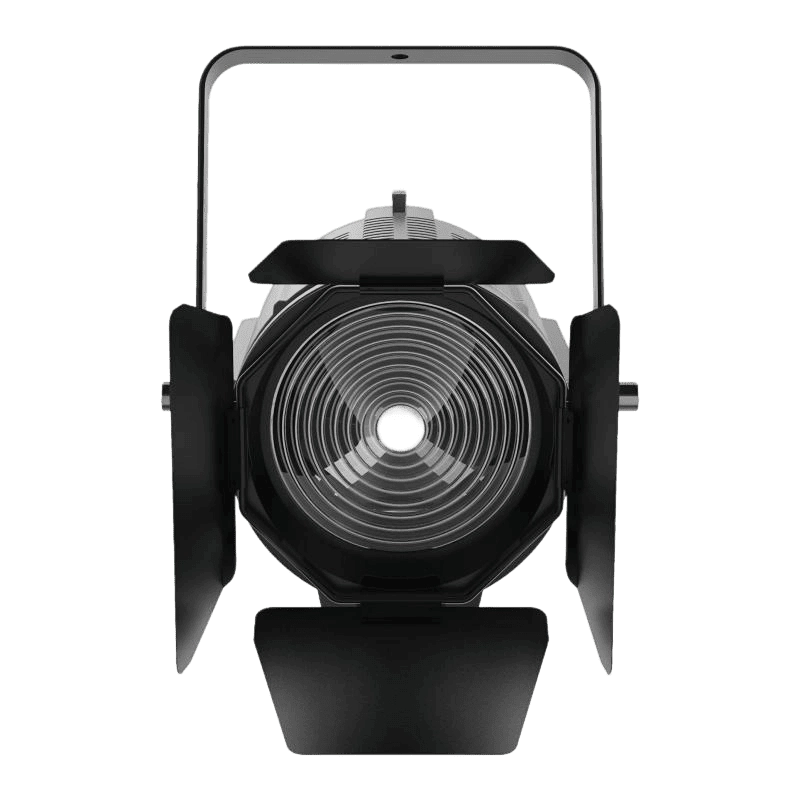
300 W RGBW LED Fresnel light
The LED Studio Fresnel Spotlight is a professional lighting device specifically designed for film and television studio stages, web series sets, and high-definition live streaming rooms. It features a high-power COB LED combined with a premium Fresnel lens optical system, delivering ultra-high color rendering (Ra ≥ 95, R9 ≥ 90, TLCI ≥ 96) and uniform and soft light output with smooth edge transitions. Free from harmful UV/IR radiation, it protects actors’ skin and props.
The spotlight offers 0–100% 16-bit linear flicker-free dimming and supports DMX512/RDM remote control. Coupled with four-leaf barndoors, it enables precise shaping of character outlines and scene layering.
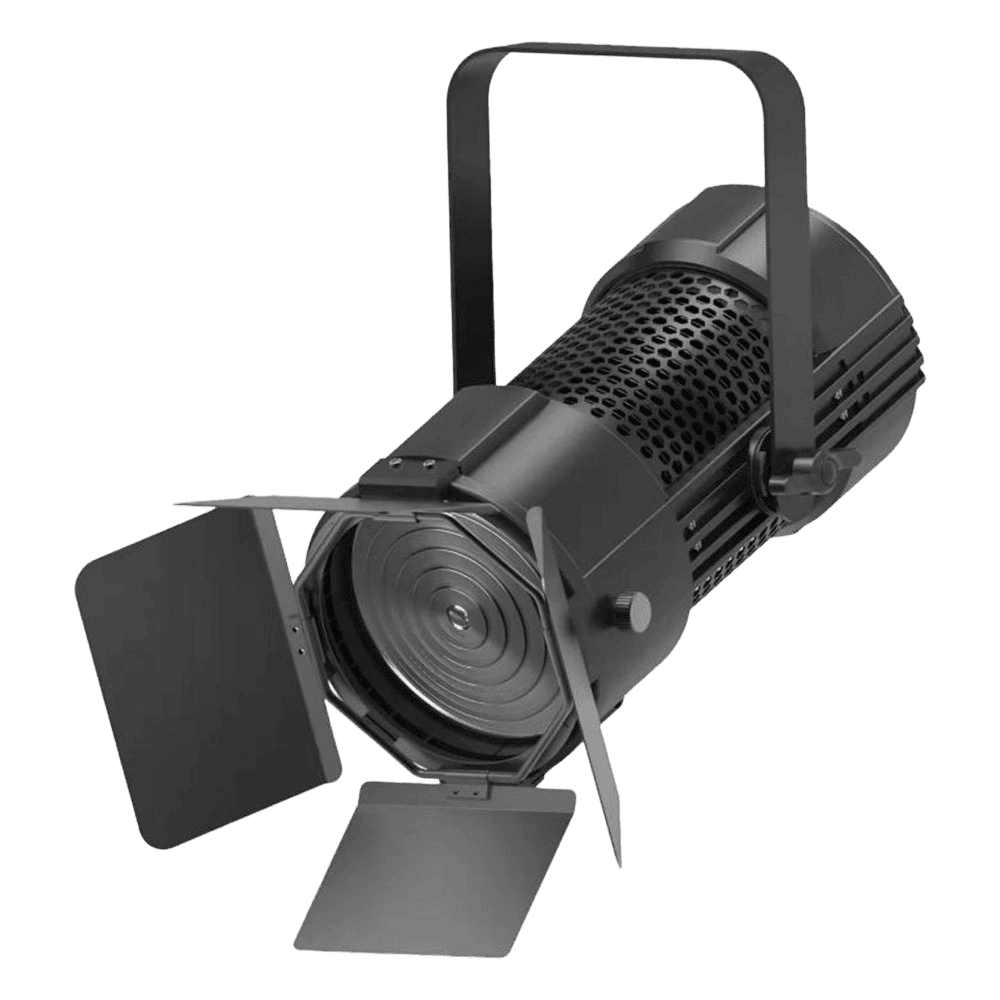
100W LED Fresnel Light
The LED Studio Fresnel Spotlight is a professional lighting device specifically designed for film and television studio stages, web series sets, and high-definition live streaming rooms. It features a high-power COB LED combined with a premium Fresnel lens optical system, delivering ultra-high color rendering (Ra ≥ 95, R9 ≥ 90, TLCI ≥ 96), uniform and soft light output with smooth edge transitions. Free from UV/IR harmful radiation, it protects actors’ skin and props. The spotlight offers 0–100% 16-bit linear flicker-free dimming and supports DMX512/RDM remote control. Coupled with four-leaf barn doors, it enables precise shaping of character outlines and scene layering.
Flexible color temperature options include 3200K (warm white tungsten), 5600K (cool white daylight), or continuously adjustable from 2700K to 6500K. With minimal color deviation (SDCM), it ensures true-to-life skin tone reproduction.
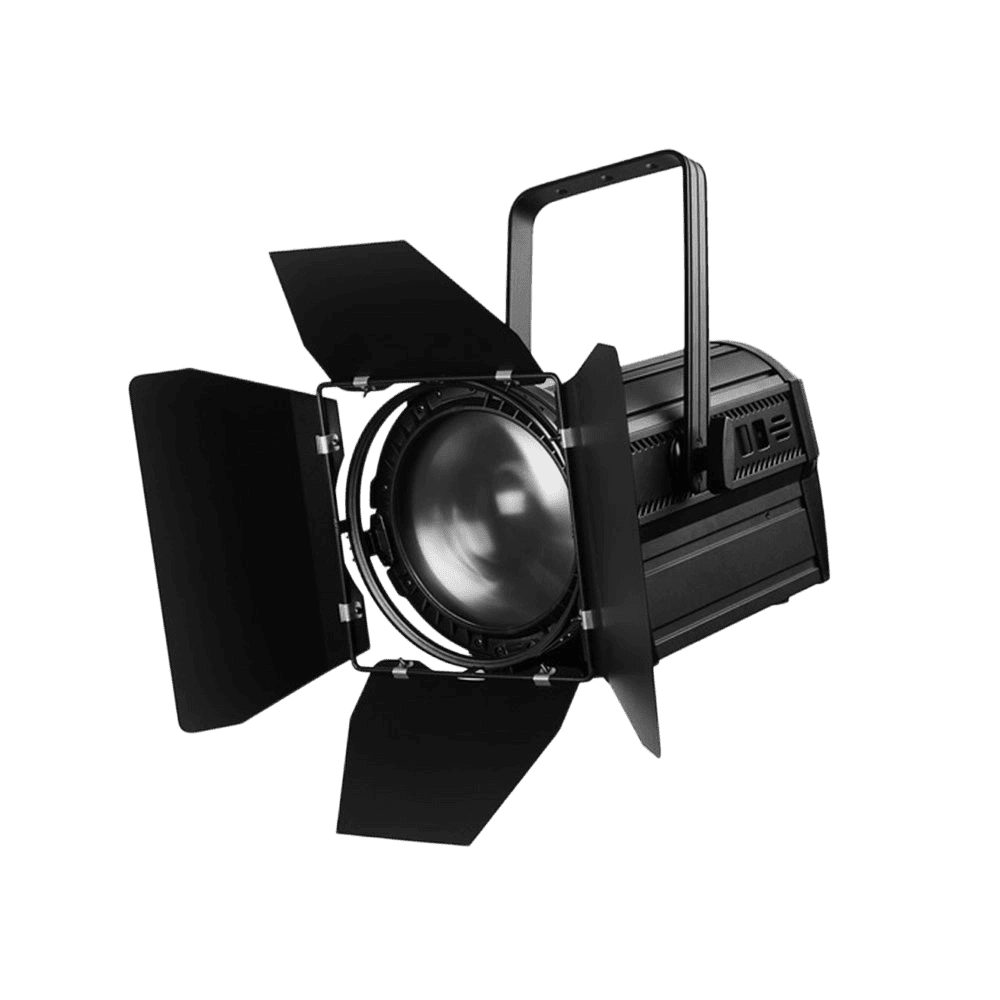
200 W RGBW LED Fresnel Light
The LED Studio Fresnel Spotlight is a professional lighting device specifically designed for film and television studio stages, web series sets, and high-definition live streaming rooms. It features a high-power COB LED combined with a premium Fresnel lens optical system, delivering ultra-high color rendering (Ra ≥ 95, R9 ≥ 90, TLCI ≥ 96) and uniform and soft light output with smooth edge transitions. Free from harmful UV/IR radiation, it protects actors’ skin and props.
The spotlight offers 0–100% 16-bit linear flicker-free dimming and supports DMX512/RDM remote control. Coupled with four-leaf barndoors, it enables precise shaping of character outlines and scene layering.
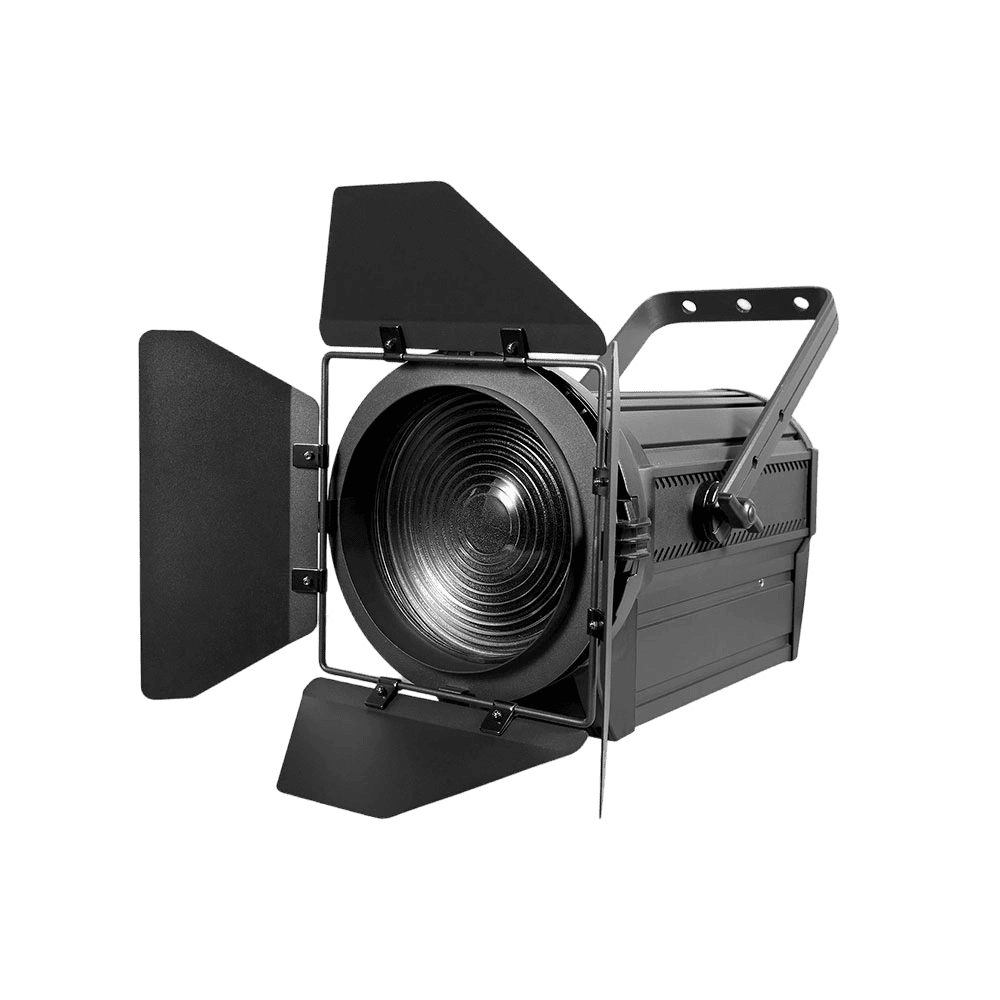
200W LED Fresnel Light
The LED Studio Fresnel Spotlight is a professional lighting device specifically designed for film and television studio stages, web series sets, and high-definition live streaming rooms. It features a high-power COB LED combined with a premium Fresnel lens optical system, delivering ultra-high color rendering (Ra ≥ 95, R9 ≥ 90, TLCI ≥ 96), uniform and soft light output with smooth edge transitions. Free from UV/IR harmful radiation, it protects actors’ skin and props.
The spotlight offers 0–100% 16-bit linear flicker-free dimming and supports DMX512/RDM remote control. Coupled with four-leaf barn doors, it enables precise shaping of character outlines and scene layering.
Discuss Your Lighting Project with Our Experts
If you have any comments or good suggestions, please leave us a message; later our professional staff will contact you as soon as possible.
Creating a superior lighting experience with pure light colors.
Guangzhou LEEMC Stage Lighting Technology Co., Ltd.
Email: info@lmstagelight.com
WhatsApp: +86 188 2626 7413
Address: Room 601, Unit 01, Building A8, Zone A, Konggang Meiwan Science and Technology Park, Huadu District, Guangzhou City, Guangdong Province, China.
Social media:
LM light
lmstage
LM STAGE